

What are key First Amendment cases on speech, press, and religion
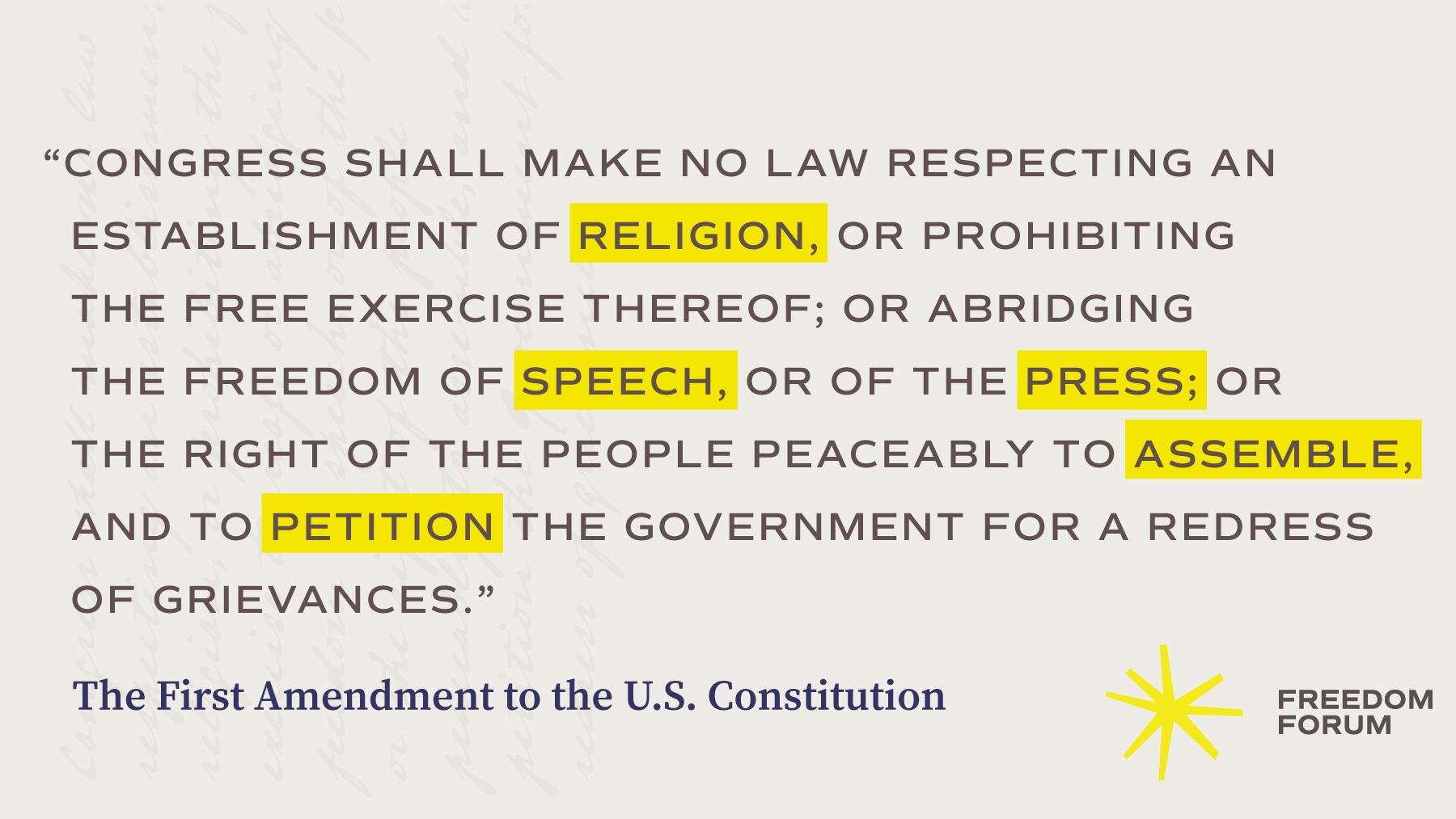
The First Amendment of the United States Constitution is a powerful tool for freedom of expression, safeguarding fundamental rights related to speech, press, and religion. Understanding key First Amendment cases is essential for recognizing how these rights have been interpreted and defined over time. Throughout American history, the balance between protecting these freedoms and addressing societal concerns has led to landmark Supreme Court decisions that shape our understanding of what constitutes protected speech.
In exploring significant amendment 1 cases, we will delve into the evolution of free speech and its limitations, the essential role of the press in a democracy, and the complex relationship between religion and the state. This article aims to provide a comprehensive overview of vital cases that have defined the First Amendment landscape, as well as the implications these cases have for current and future discussions about freedom and regulation in the U.S.
Index Content
- Understanding the First Amendment
- Historical Context of First Amendment Cases
- Supreme Court Definitions and Landmark Cases
- Defamation: Libel and Slander
- The Child Pornography Exception
- Hate Speech vs. Protected Speech
- Implications for Press Freedom
- Conclusion: The Evolving Nature of First Amendment Rights
Understanding the First Amendment
The First Amendment serves as a cornerstone of American democracy, consisting of five provisions that protect various forms of communication and expression. These provisions explicitly guarantee the freedom of speech, freedom of the press, the free exercise of religion, and the right to petition the government for redress of grievances. Each of these freedoms plays a crucial role in ensuring that individuals can freely express their ideas and beliefs without governmental interference or repression.
The Importance of Free Speech
Free speech is vital for a functioning democracy as it facilitates the exchange of ideas, critiques of the government, and discourse on societal issues. The ability to openly share opinions promotes diversity of thought and helps the public reach informed conclusions about policies and candidates. Moreover, the protection of free speech enables marginalized communities to voice their concerns and advocate for change, breaking down barriers and fostering equality.
Historical Context of First Amendment Cases
To fully grasp the impact of the First Amendment, it is essential to consider its historical context. The amendment was ratified in 1791, rooted in Enlightenment principles emphasizing human rights and the importance of dissent. Early Supreme Court cases laid the groundwork for contemporary interpretations, addressing limits and protections surrounding speech. Among the most significant cases was Schenck v. United States (1919), where the Court established the clear-and-present-danger test, shaping future free speech discussions.
Categories of Speech Not Protected
While the First Amendment protects a wide range of expression, it also recognizes specific categories of speech that are not entitled to protection. These exceptions include incitement to imminent lawless action, defamation, and obscenity, among others. The Supreme Court has clearly outlined these limitations, as certain types of speech can pose significant harms to individuals and society, disrupting public order and individual rights.
Supreme Court Definitions and Landmark Cases
Over the years, the Supreme Court has addressed various aspects of free speech in landmark rulings. These amendment 1 cases illustrate the Court's evolving interpretations of the First Amendment. For instance, in Brandenburg v. Ohio (1969), the Court ruled that speech advocating illegal action is protected unless it is directed to inciting or producing "imminent lawless action." This decision tightened the boundaries for permissible restrictions on speech while maintaining robust protections for dissenting voices.
Incitement to Imminent Lawless Action
The incitement to imminent lawless action standard requires specific criteria to determine if speech can be restricted. Following the Brandenburg ruling, the government cannot penalize speech merely because it advocates illegal acts unless there is a clear intent to incite immediate violence or lawbreaking. This protection emphasizes the importance of context, urging courts to consider the potential impact of words in light of the circumstances under which they were spoken.
Defamation: Libel and Slander
Defamation, encompassing both libel and slander, represents a category of speech that can lead to legal consequences. Libel refers to false statements made in written or published form, while slander pertains to spoken falsehoods. In New York Times Co. v. Sullivan (1964), the Supreme Court established the "actual malice" standard, requiring public figures to prove that a false statement was made with knowledge of its falsity or with reckless disregard for the truth before they could win a defamation case.
The Obscenity Standard
Obscenity is another critical exception to First Amendment protection. The Supreme Court's landmark ruling in Miller v. California (1973) established a three-part test for determining obscene materials. The Court concluded that material can be deemed obscene if, when taken as a whole, it lacks serious literary, artistic, political, or scientific value, appeals to the prurient interest, and depicts sexual conduct in a patently offensive manner. This ruling has shaped the ongoing debate surrounding censorship and artistic expression.
The Child Pornography Exception
Child pornography represents one of the strictest exceptions to First Amendment protections. The Supreme Court, in New York v. Ferber (1982), upheld laws prohibiting the distribution of child pornography since it inherently exploits children and lacks value as protected speech. Even materials that suggest the presence of minors but do not depict actual children can still face severe scrutiny under obscenity laws, emphasizing the importance of protecting children's welfare.
Fighting Words and Their Consequences
Fighting words are defined as speech that incites violence or incites immediate retaliation. The Supreme Court's decision in Chaplinsky v. New Hampshire (1942) set a precedent recognizing fighting words as unprotected speech. This ruling underscores the idea that while free expression is valued, speech that leads to violence or public disorder falls outside the protections of the First Amendment.
Hate Speech vs. Protected Speech
In the realm of hate speech, the Supreme Court has traditionally upheld that such expressions are protected under the First Amendment, as long as they do not reach the threshold of incitement or targeted threats. Notable cases such as Brandenburg and R.A.V. v. City of St. Paul (1992) illustrate that while hateful ideologies may be reprehensible, the right to express them often prevails under constitutional protections. However, speech that includes threatening and violent elements is not protected.
Case Studies of Key First Amendment Decisions
- Tinker v. Des Moines Independent Community School District (1969): The Court held that students do not shed their constitutional rights at the schoolhouse gate, protecting symbolic speech.
- Citizens United v. FEC (2010): This ruling affirmed that political spending is a form of protected speech, significantly impacting campaign financing.
- New York Times Co. v. United States (1971): The Court prioritized press freedom, ruling against prior restraint of the publication of the Pentagon Papers.
Implications for Press Freedom
The First Amendment also plays a crucial role in safeguarding the freedom of the press. Landmark cases have affirmed the press's right to publish information without interference from the government. However, courts have often grappled with balancing this freedom against national security interests and the right to a fair trial. The outcome of cases like the New York Times Co. v. United States emphasizes the high value placed on the press's role in a democratic society and its function as a check on government power.
The Role of Religion in the First Amendment
The First Amendment guarantees the free exercise of religion and prohibits the government from establishing a religion, thereby ensuring a separation between church and state. Supreme Court cases such as Engel v. Vitale (1962) and Employment Division v. Smith (1990) demonstrate the complexities surrounding religious freedoms, with courts seeking to balance individual rights against governmental interests.
Conclusion: The Evolving Nature of First Amendment Rights
In conclusion, the journey of First Amendment cases illustrates a dynamic interplay between the protection of free speech, the press, and religious freedom, framed by historical context and societal change. As new challenges emerge, the courts continue to refine their approaches to interpreting these rights. The ongoing discourse around the First Amendment is essential in shaping the future of free expression, reminding us that while rights are protected, they are also subjected to scrutiny and evolution in response to contemporary issues.
Understanding key First Amendment cases is vital for appreciating the complexities of speech, press, and religion in the United States. The commitment to these fundamental freedoms remains a cornerstone of American democracy, as we strive to ensure that they adapt to the demands of an ever-changing society.
Did you find this article helpful? What are key First Amendment cases on speech, press, and religion See more here Education.

Hypothesis: Definition, Meaning, and Variations Explained

What are Cartier's key routes, voyages, and accomplishments

Painting the Legacy of Vincent van Gogh: An Artistic Journey

Rally Legal: Understanding Its Definition and Meaning

Foldings: Understanding the Definition and Meaning of Folded

What was trench warfare like on the Western Front in 1914
Leave a Reply
Related posts